Low Volume CNC Machining With Mil-Spec Anodizing, in One Shop
Standard Machine and Manufacturing, in Greenville, Kentucky, machines short runs and prototypes of aluminum parts and anodizes them to MIL-PRF-8625 on its own line, so a small order ships as a finished, inspected part from one shop. A run of a few parts goes through the same process, the same inspection and the same paperwork as a run of a thousand.
The usual problem looks like this. An engineer has a handful of aluminum parts and a finish callout on the print. A volume machine shop quotes it reluctantly. The anodizer has a base charge that covers far more pieces than the order holds, the kind machinists call a lot charge. Then a finish promised in a few days takes a few weeks.
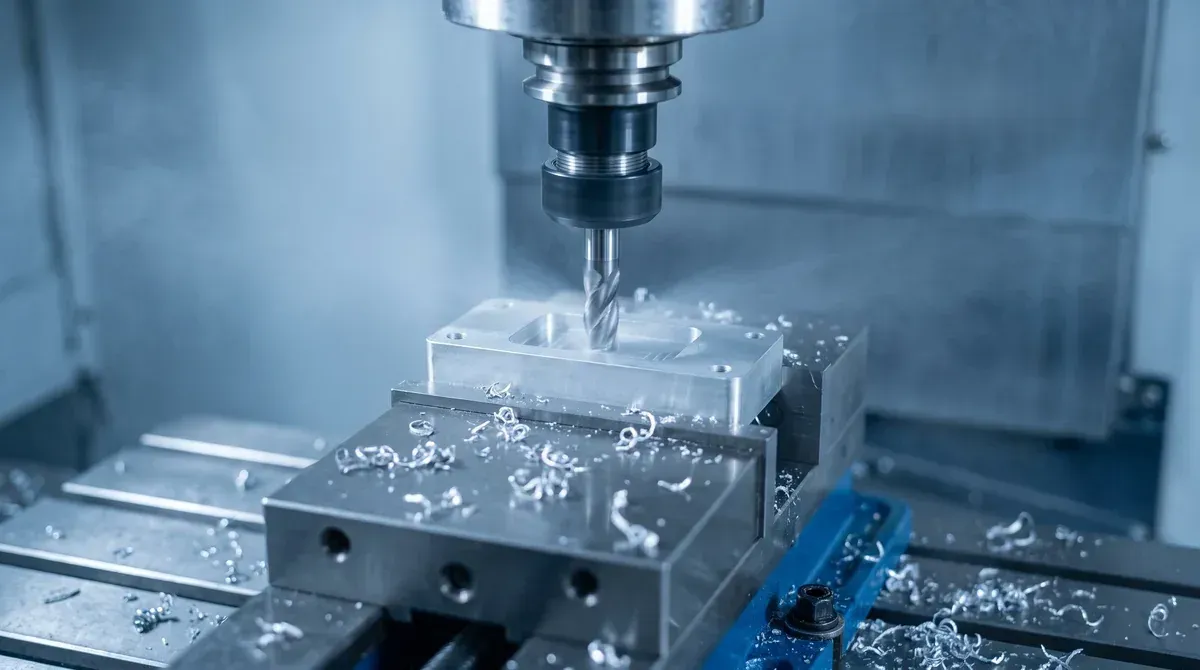
Short runs are not a side job here. Our
low volume CNC machining is one end of how Standard runs: big repeat orders at one end, and few-off parts that need an experienced machinist at the other. A good deal of the work is prototype quantity, two of one part and four of another, for a customer that builds automation equipment.
Have a short run with a finish callout?
Start your RFQ.
A Small Lot Is Still a Whole Lot
Under MIL-PRF-8625 (still written MIL-A-8625 on plenty of drawings), a lot is every part of one part number anodized in the same tank, by the same process, and offered for acceptance together. Five parts or five hundred, it is a complete lot. It gets accepted the same way.
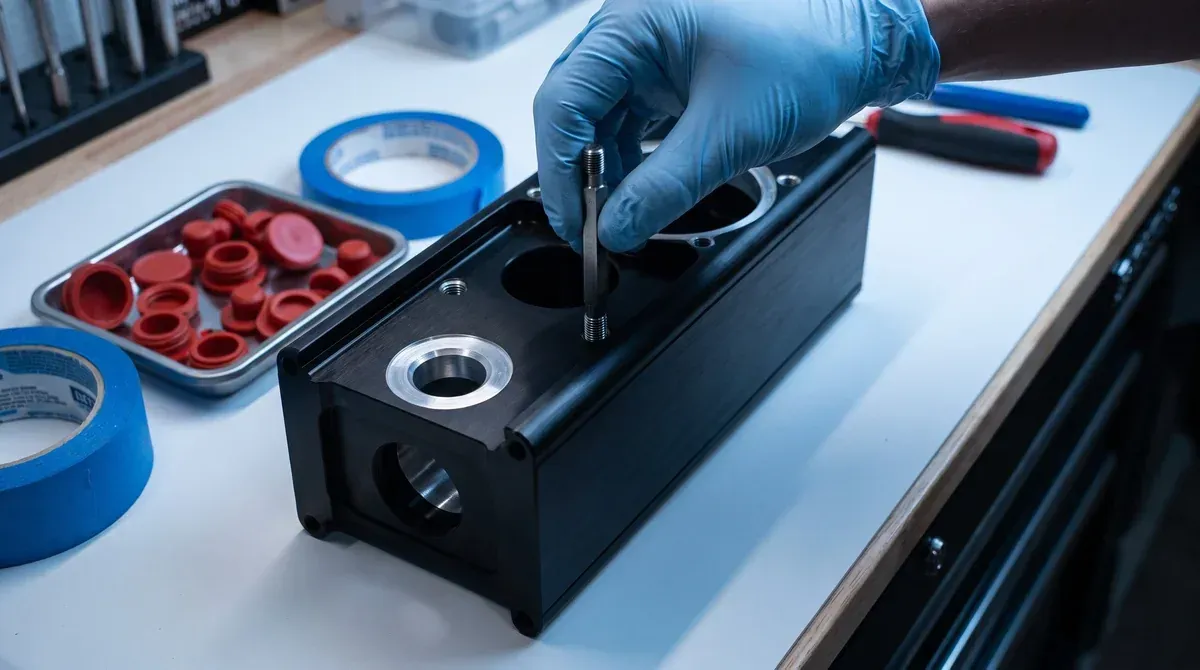
Process control tests run on a fixed schedule whatever the lot size. Type III thickness is measured, by eddy current or by cross-section. Dyed Class 2 color is checked at lot acceptance under the current revision. None of that work shrinks when the part count does, which is why anodizers carry a base or lot charge. It isn't a penalty for a small order. It is the cost of treating three parts as a real lot.
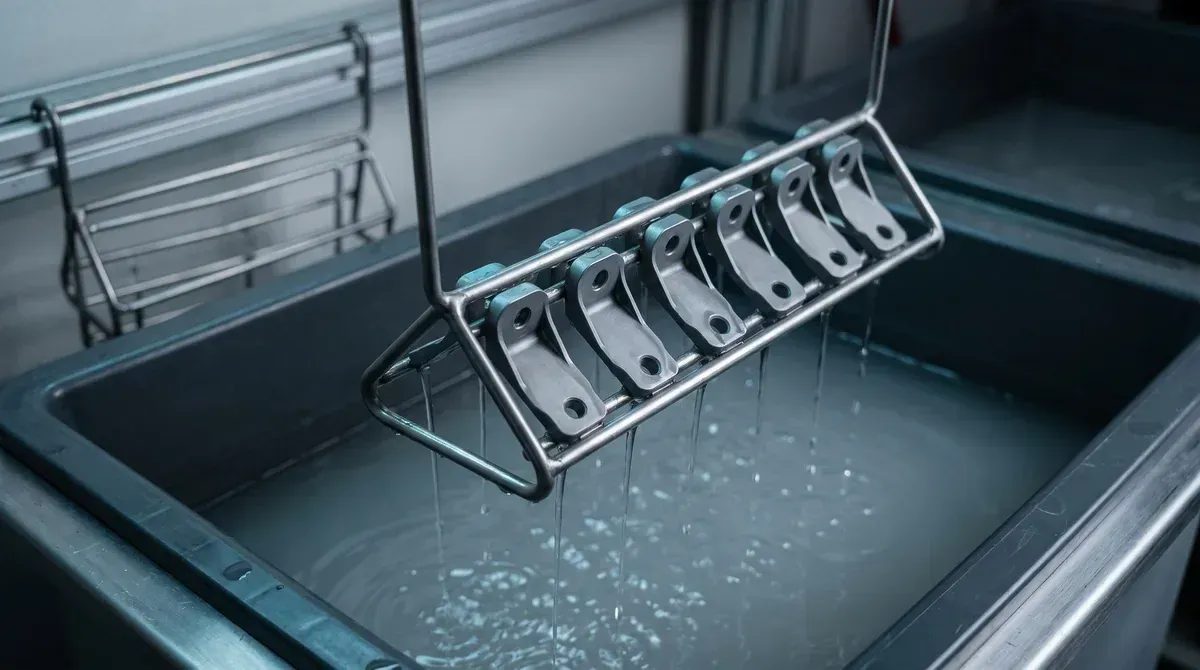
On our own
MIL-PRF-8625 anodizing line, a short run gets exactly that treatment:
- The same process as a production lot of the same part.
- Thickness measured wherever Type III is called out.
- Color checked on dyed lots against the drawing.
- A certificate of conformance with the part number and revision, PO, quantity, lot, a statement of conformance, a signature and a date.
Every lot ships with
paperwork that traces to the parts in the box, whether the box holds four parts or four hundred.
Color Across Reorders
A reorder of three parts, months after the first five, is where finish problems like to hide.
Finishers advise sending all of a job's finishing to one anodizer, because metal anodized on different days is hard to match, and a different shop is one more variable on top of that. Different alloys anodize at different voltages, so they are not run in the same tank. And when a reorder goes to whichever anodizer has room that week, the second lot can come back a shade off the first.
At Standard a reorder runs on the same line and the same process as the first lot. That doesn't make two lots identical. The metal itself varies by mill lot. What it removes is the finisher as a variable. When color matters, sending a part from the earlier batch as a reference is still the best habit there is.
Bridge Parts Are Customer Parts
Bridge production is the stretch between prototype and volume: production-quality parts, made before the volume tooling or supplier is in place. The risk is treating those parts like prototypes when they are going to customers.
On an aerospace job, anodize is a special process, and the certificate is what proves it was done to spec. A certificate of conformance is a declaration, not a data package, so it needs to be right. A short run that ships to a customer needs the same paperwork as the production lot that follows it, and gets it here.
And plenty of short runs are the front end of something bigger. Engineers on the forums describe it the same way: a few parts now, with the possibility of growing into larger quantities. When that happens, the parts that grow should be the same parts. A short run machined and finished by the shop that would run the volume carries its route forward, so the first production lot is not the first time anyone has tried that route.
The Straight Answer
Does a short run cost the same per part as a production run?
No. A lot carries fixed work (racking, testing, inspection, paperwork) that does not shrink with the part count, so a few parts carry more of it each. What a short run should not get is a different process. The parts, the inspection and the certificate should be the same as they would be at full volume.
Questions Engineers Ask About Short Runs
Can a Prototype Run Be Anodized to MIL-PRF-8625?
Yes. The specification defines a lot by part number, tank and process, not by quantity. A prototype run is anodized, tested and accepted as its own complete lot, with the same certificate a production lot would carry.
Will a Reorder Match the First Lot's Color?
It gets closer when the same shop runs the same process, but no one can promise an exact match. Color varies with the alloy, the temper and the mill lot. Sending a part from the first batch as a reference gives the reorder a target.
Specifying a Short Run So It Ships Finished
Put the whole finish callout on the print: the specification, type and class, the color, and the thickness on Type III. Note the alloy and temper. Say whether the parts need a certificate and what it should carry. Then ask for the machining and the finish on one quote.
It also helps to tell the shop the quantity you need now and the quantity you expect next. A run of six that might become six hundred is quoted and planned differently from a run of six that ends there, and we would rather know which one we are building.
We check the finish callout when the job is quoted, so the lot is built to it from the first cut. If the print leaves something open, such as a color with no reference or a Type III part with no thickness, we ask before we program the part, not after it comes out of the tank.
How Standard Machine and Manufacturing Can Help
Standard Machine and Manufacturing machines short runs and prototypes in aluminum and anodizes them to MIL-PRF-8625 on its own line in Greenville, Kentucky, so a small order ships as one finished part from one shop. Start a project with us by
starting your RFQ or
reaching out directly. Call us at 270.377.7172.