Need a Machine Shop That Also Anodizes? What One Roof Does for Your Part
By Standard Machine and Manufacturing • 12 October 2026
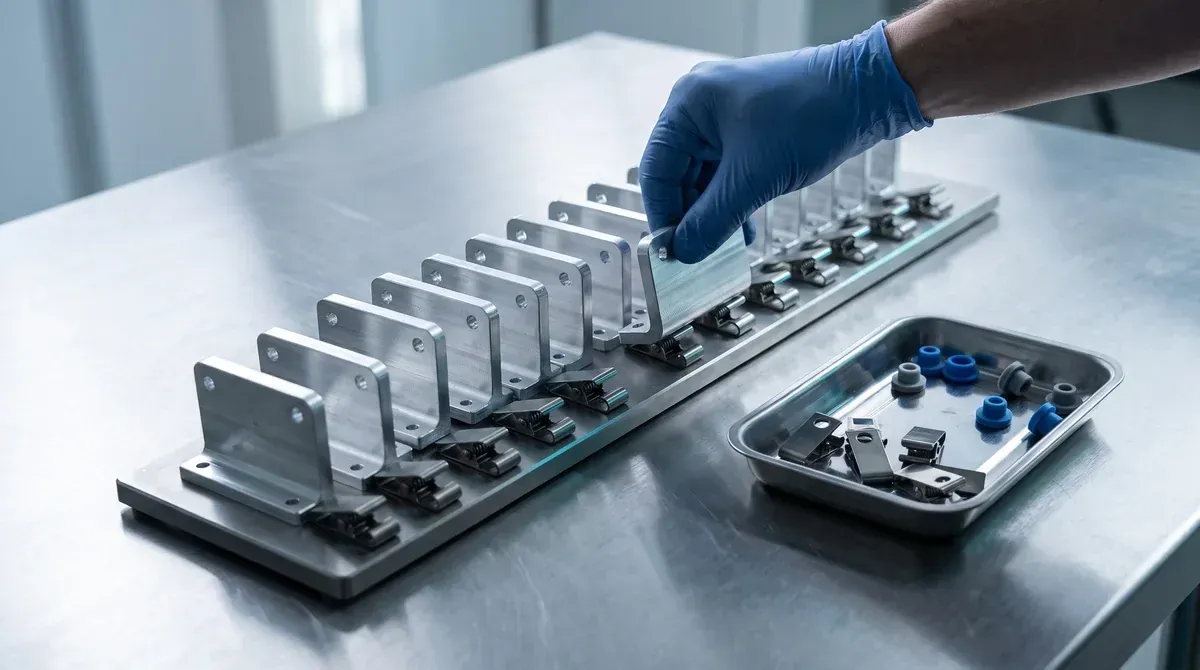
What a Machine Shop That Also Anodizes Changes for the Part
Hire a machine shop that also anodizes, and the finish stops being a separate job. The coating is planned while the part is still a drawing. The part stays in one building from raw plate to finished surface. And one company answers for how it turns out.
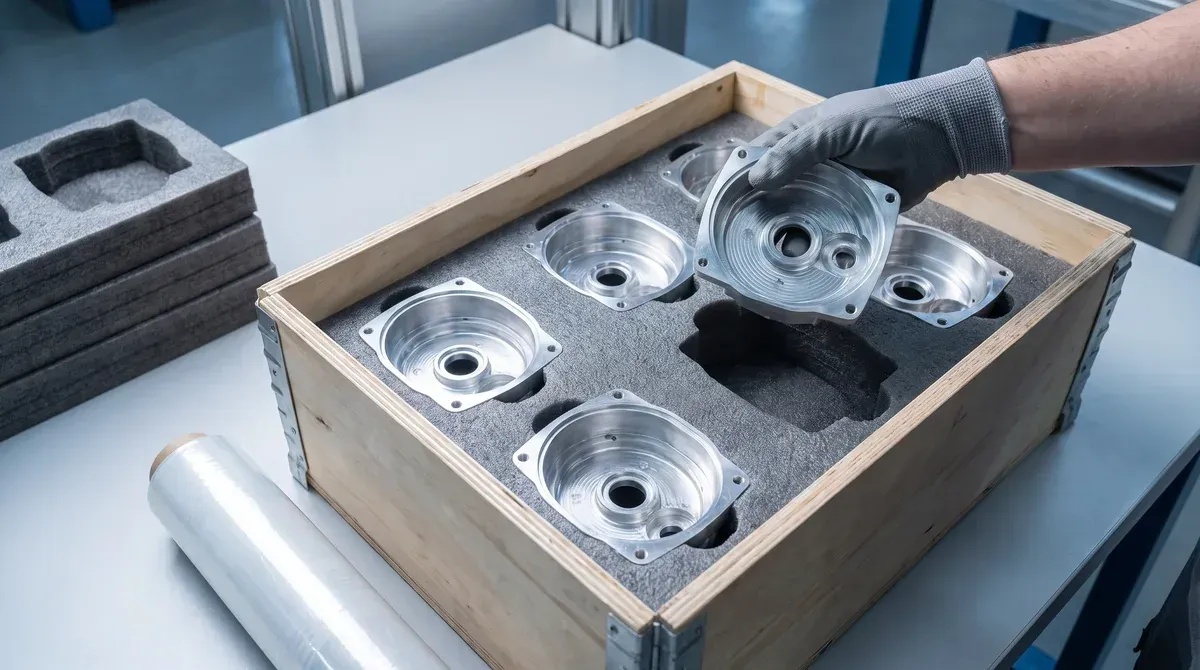
Standard Machine and Manufacturing machines and anodizes aluminum parts under one roof in Greenville, Kentucky. CNC machining and MIL-A-8625 anodizing, Type II and Type III, run in the same building through Standard's anodizing division, BluArc, so a part machined at Standard leaves the shop finished.
A buyer looking for a machine shop with in-house anodizing is usually trying to remove a step. The second vendor, the second quote, and the truck that runs between them.
Nothing about CNC machining aluminum parts changes because the anodizing line sits across the floor. What changes is everything that happens after the last tool comes out of the spindle.
Have an aluminum part that needs both? Start your RFQ.
The Finish Gets Planned Before the First Cut
Anodizing is not paint sitting on top of the metal. It grows out of the aluminum itself, part of it into the surface and part of it out, and the published rule is that each coated surface grows by about half the coating thickness. On a flat face nobody notices. On a tight bore or a thread, that growth is the difference between a part that passes and one that does not.
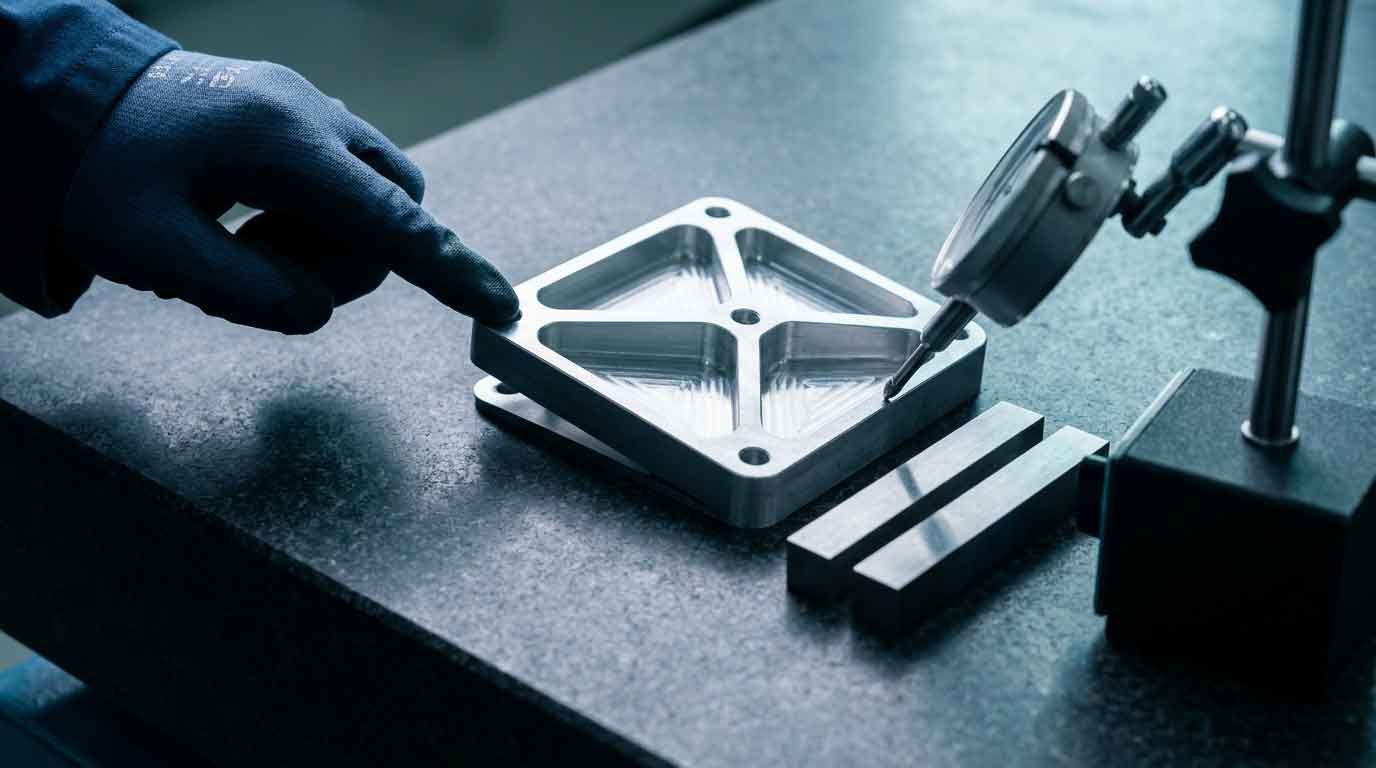
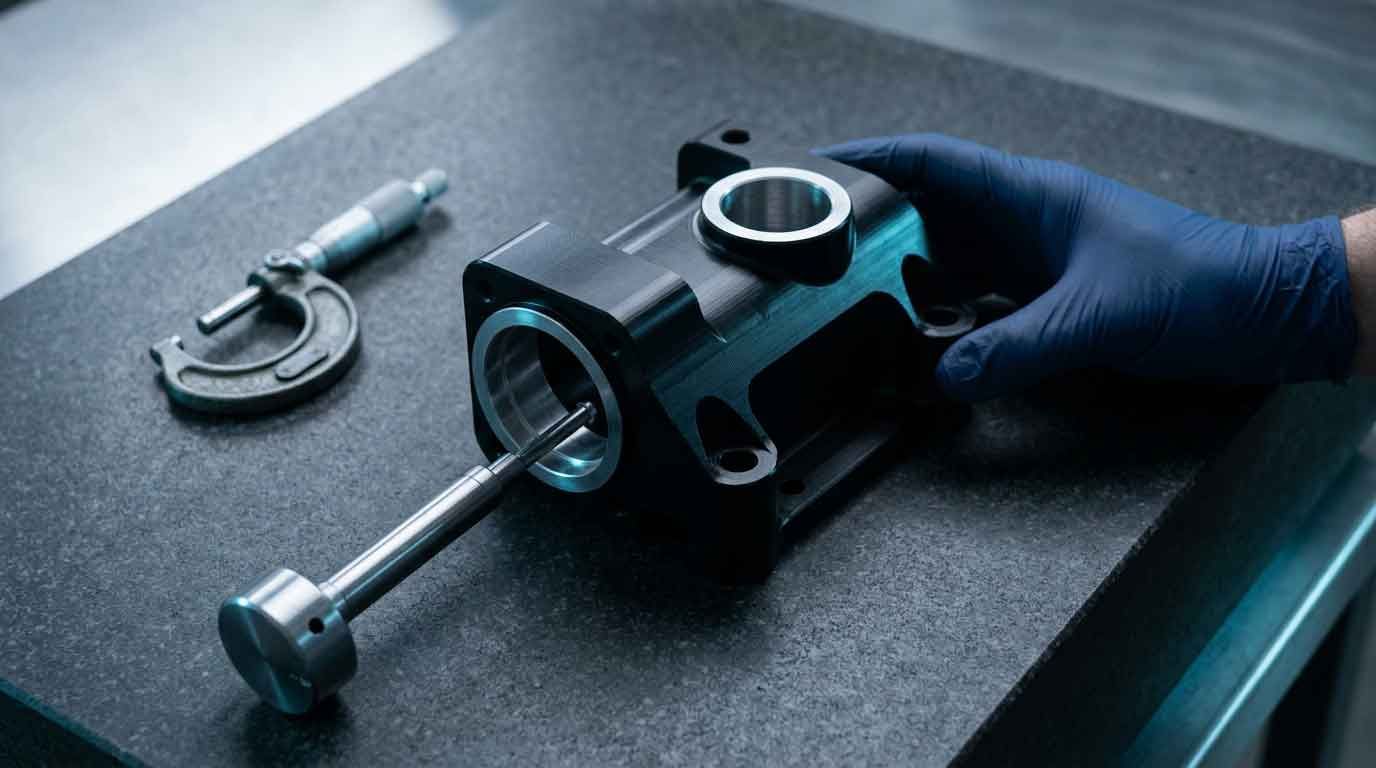
The anodizing specification, MIL-PRF-8625, says anodizing comes after all machining is done. It also puts the allowance for coating growth on the machinist. So the decision that decides whether a coated feature lands in tolerance gets made at the machine, before the part ever reaches a tank. We walked through the arithmetic in how anodizing changes part dimensions, including what happens to holes and threads.
When the machinist and the anodizer work for different companies, that allowance is one shop's estimate of another shop's process. When they work in the same building, it is a short walk.
Rack marks are the small version of the same thing. An anodized part has to carry current, so it touches a rack somewhere, and wherever it touches, no coating forms. The specification allows those contact marks. Where they land is negotiable, though, and the only time to negotiate it is before the run. Between two companies that tends to be a round of emails after the parts are already cut. Under one roof the contact points can be picked while the part is still being programmed, somewhere a bare spot does no harm.
There is a paperwork side too. The inspection records for the machining and for the finish come from one company, which is simpler to review than two sets from two suppliers. It is also one fewer supplier for a buyer to qualify, and one fewer sub-tier for a prime's requirements to flow down to. That is part of how we inspect and document finished parts.
One Building, One Schedule, One Company Answering for It
Here is what drops out of the job when both operations live under one roof:
- The second purchase order. One RFQ covers the machining and the finish, and one quote comes back.
- The freight in the middle. Machined parts are not packed, shipped and unpacked between operations, and freshly machined surfaces do not ride in a truck before the coating is there to protect them.
- The second calendar. The machining and the anodizing sit on one schedule, kept by one company, instead of two schedules kept by two.
- The round trip on a reject. At an outside finisher, a color or rack-mark rejection restarts the loop: pack, ship, wait in line, inspect. Here the part walks back across the floor.
- The question of whose problem it is. If a coated feature comes back wrong, there is one call to make, and the company on the other end did both halves.
That last one matters more than it looks on a quote. A split job has a seam in it, and problems collect at seams.
It also runs the other way. Some of BluArc's anodizing customers found the anodizing first, learned the same building machines parts, and sent the next job as a drawing instead of a box of parts to coat.
The Tanks Were Sized to the Machine
Standard's largest cutting envelope is 120 inches. When the anodizing line went in, the tanks were sized to the same 120 inches.
That was on purpose. If we can machine it, we can anodize it. No part gets cut here that then has to leave the building to find a tank big enough to finish it.
It matters most on the parts that are hardest to place anyway. A long part is the one with the fewest finishers able to take it, and the one that is the most work to crate, ship and uncrate between two vendors.
The Straight Answer
Does one roof mean you can anodize anything you machine?
No, not anything. Anodizing is an aluminum process, which is a large part of why Standard machines aluminum and nothing else. A steel or stainless part needs a different shop and a different finish, and we would say so at the quote rather than after.
Within aluminum, the limit is size. There is always a shop somewhere with a bigger tank. Ours matches the largest part we cut, so the question rarely comes up.
Questions Buyers Ask About Machining and Anodizing Together
Can You Anodize Parts Another Shop Machined?
Yes. BluArc anodizes parts for other machine shops, and that outside work is now a large share of what runs through its tanks. The same specification applies whether the part was cut here or somewhere else.
What Anodize Colors Are Available?
Black, clear, red, green and blue are standard. Clear means undyed rather than colorless, so a clear hard coat comes out gray or gold-toned depending on the alloy. Other colors are possible on a large enough run of parts.
Can Features Be Kept Bare, or Parts Marked?
Yes. Masking keeps the coating off a bore, a thread or a mating surface, and laser marking puts a part number or logo into the finish once it is done. Both happen in the same building.
Scoping a Part That Needs Both
The specification's own ordering section lists what a buyer has to state for an anodized finish, and the cleanest quotes start from a print that already carries it. So send the print with the finish callout complete:
- The specification, MIL-A-8625 or MIL-PRF-8625
- The type, Type II or Type III hard coat
- The class, Class 1 (undyed, sold as clear) or Class 2 (dyed), with the color
- The coating thickness, if the part is Type III
- Any features that have to stay bare, and any marking
With that on the drawing, the allowance gets built into the machining from the first operation instead of being worked out after a part has already come back wrong.
How Standard Machine and Manufacturing Can Help
Standard Machine and Manufacturing machines aluminum parts and finishes them on its own anodizing line, in one building in Greenville, Kentucky, and quotes the part as one job from raw plate to finished surface. Start a project with us by starting your RFQ or reaching out directly. Call us at (270) 820-7009.
Ask a Question
Not ready for a full RFQ? Send the question and we will come back to you.
What Happens Next
- It goes to a person here, not to an autoresponder
- Answered by somebody who does the work
- A response within one business day
Already Have A Print?
If you have a drawing and a quantity, skip the question form. The RFQ form asks the things a quote actually needs and it takes about four minutes.
Or Just Call
270.377.7172The line answers to machining or to BluArc anodizing, so say which one you are after and it goes straight there.
Latest Posts