Anodizing Services for Machine Shops, From a Shop That Reads the Print
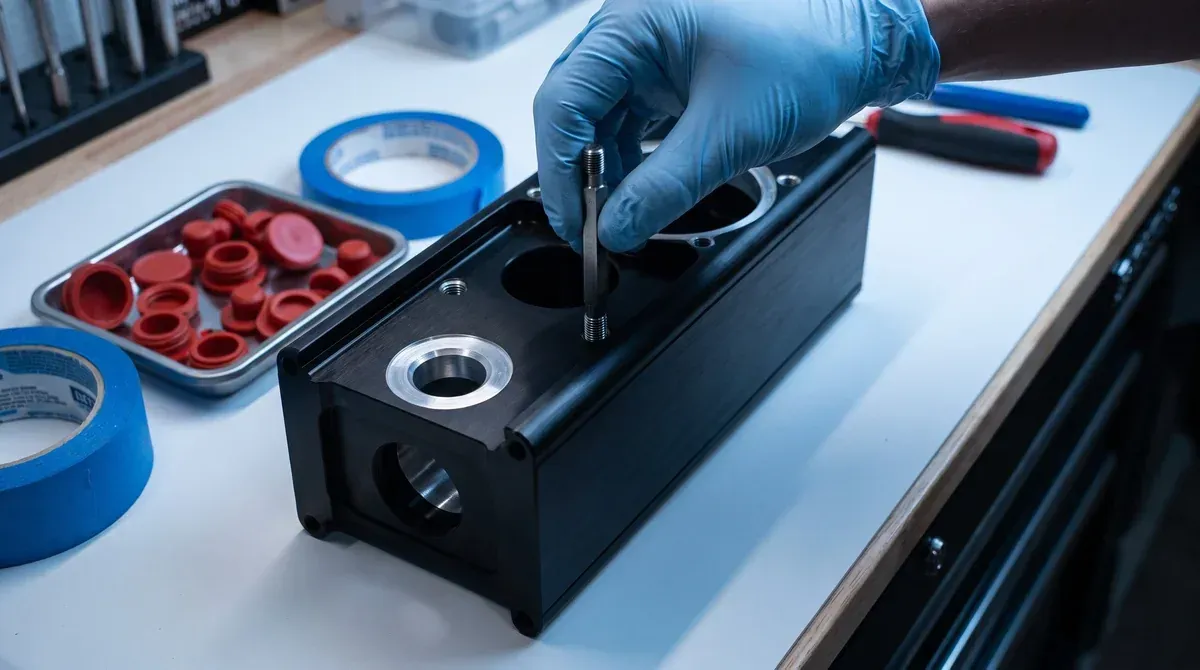
Standard Machine and Manufacturing anodizes aluminum parts for other machine shops through BluArc, its anodizing division in Greenville, Kentucky. Because BluArc sits inside a working machine shop, the parts are handled by people who read the same prints and hold the same gauges as the shop that cut them. They know which surfaces are functional, where a contact point can go, and what a tolerance means once the coating is on. Masking and laser marking happen in the same visit.
Plenty of machine shops send their anodizing out. That part is normal. The trouble starts when the parts come back with a rack mark on a sealing face, a bore that was supposed to stay bare and didn't, or a batch that went wrong and an explanation that amounts to "it happens."
That gap is what our
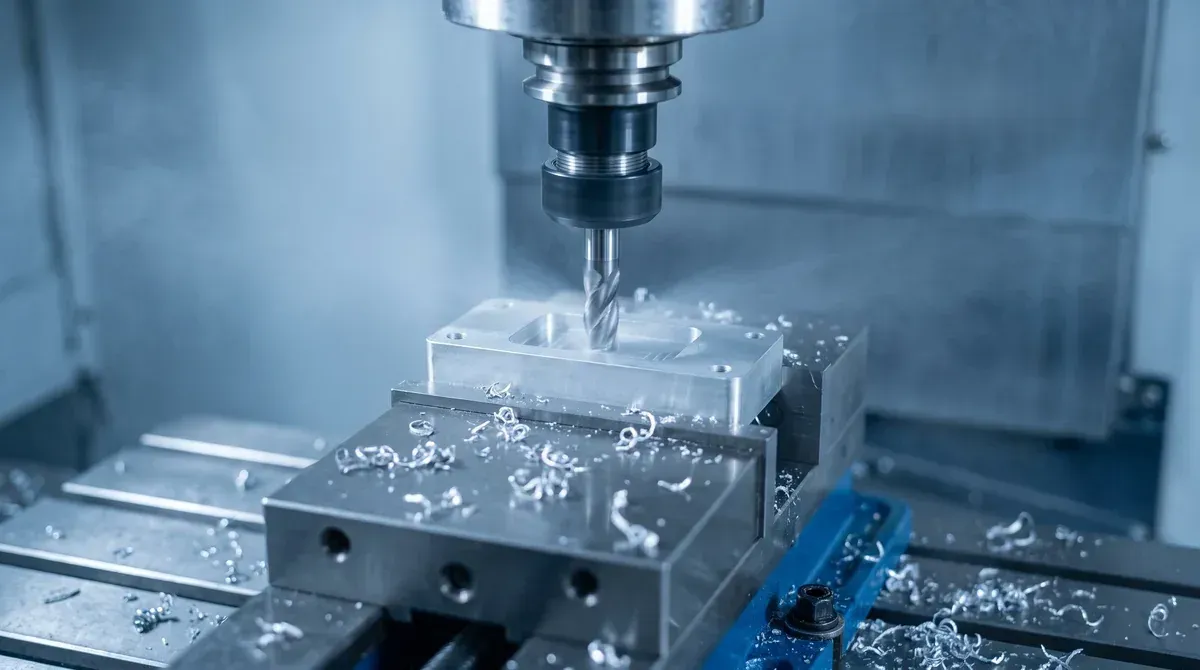
anodizing for machine shops is built to close. BluArc started out finishing Standard's own parts. Then it opened to outside shops, and now it runs their work alongside ours. A few of those shops found out afterward that we machine too, and started sending parts to be cut as well as finished.
Sending parts out for anodize?
Start your RFQ.
The Purchase Order Is the Contact-Mark Spec
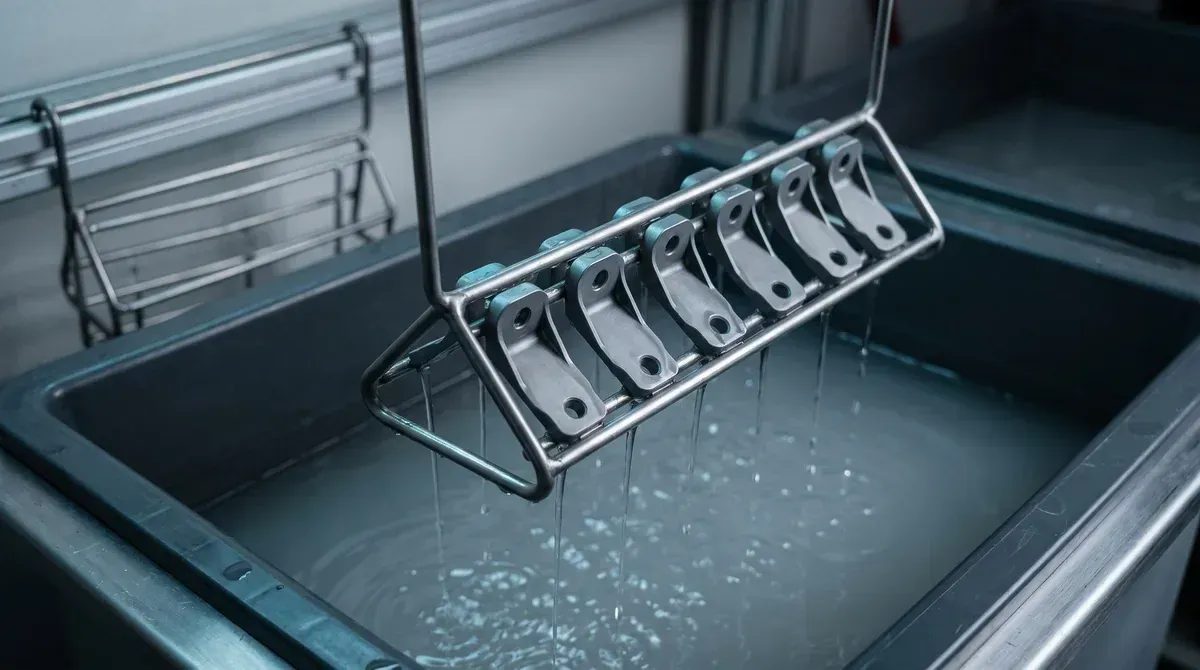
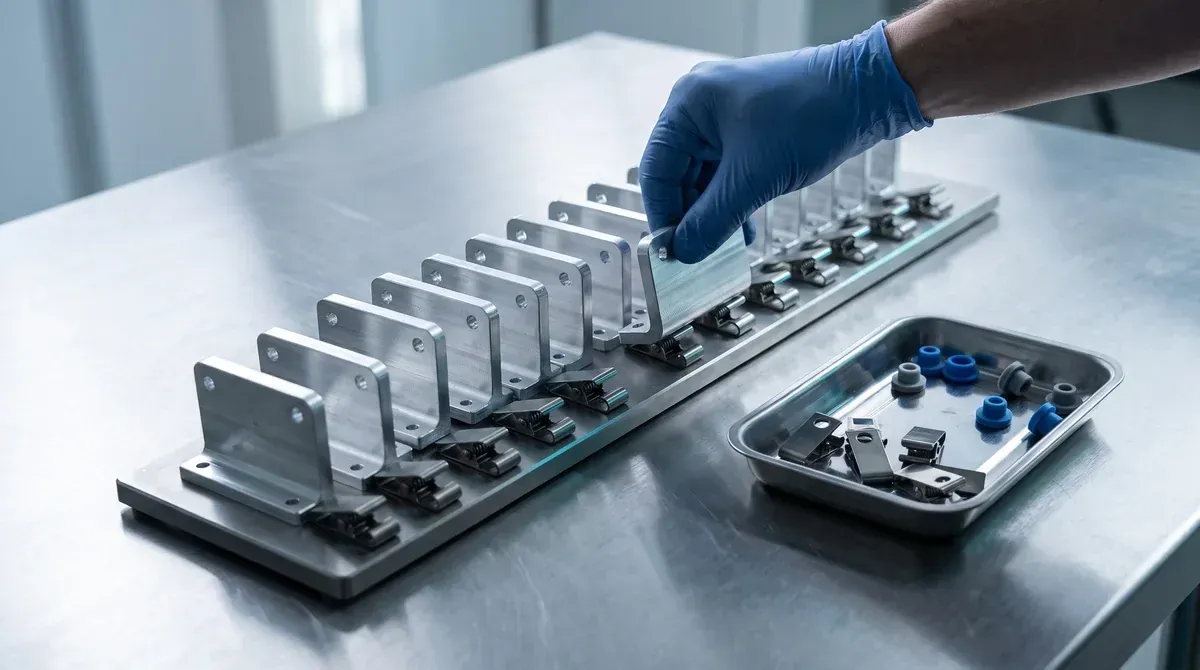
Every anodized part touches the rack somewhere, and the spot where it touches stays bare. Think of it as a fingerprint. Every part gets one. The only question is where it lands.
A part racked on an exposed surface nearly always shows a mark there. Type III hardcoat needs a firmer grip on the part than Type II, so its marks are larger. And no standard fixes how big a rack mark may be. MIL-PRF-8625 puts the location of contact marks in the buyer's ordering data when it matters to the part's function, which means the purchase order is the only place that requirement lives. If the PO says nothing, the anodizer decides.
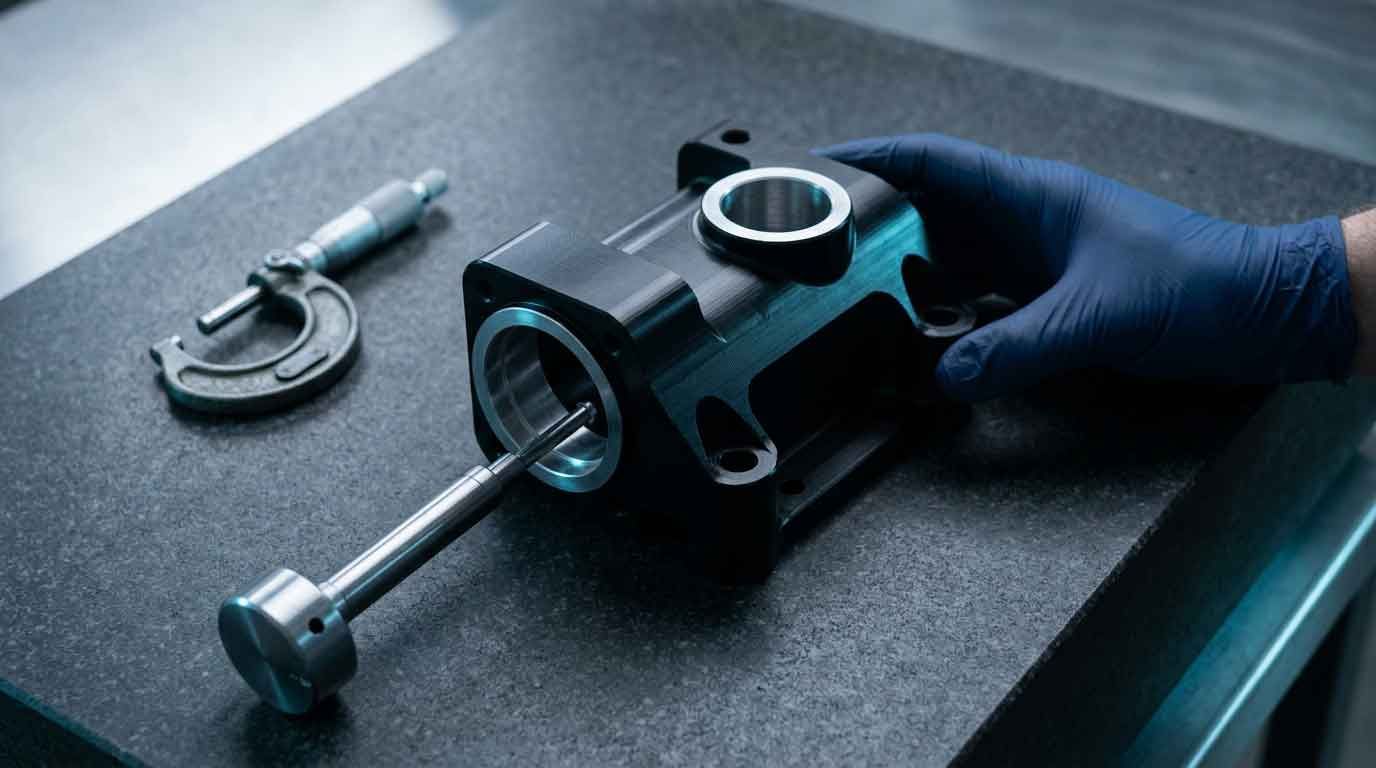
So the advice machinists give each other on the forums is the right advice: send a print showing where the parts can be racked, and talk through expectations before the run. At BluArc that conversation is the default. We ask for the print, not just the parts, and propose contact points on non-functional features before anything goes on a rack. Coating growth on threads and bores gets the same look, for the reasons we laid out in
how anodizing changes the dimensions of a machined part.
What a machine shop should put on the anodizing PO:
- The specification, type and class. Type II or Type III, dyed or clear.
- Where contact marks may and may not go. A sketch on the print beats a sentence in an email.
- Every feature that stays bare. Threads, bores, grounding points, mating faces.
- The alloy and temper. One per lot, for reasons covered below.
- The coating thickness wherever Type III is called out.
The parts come back with
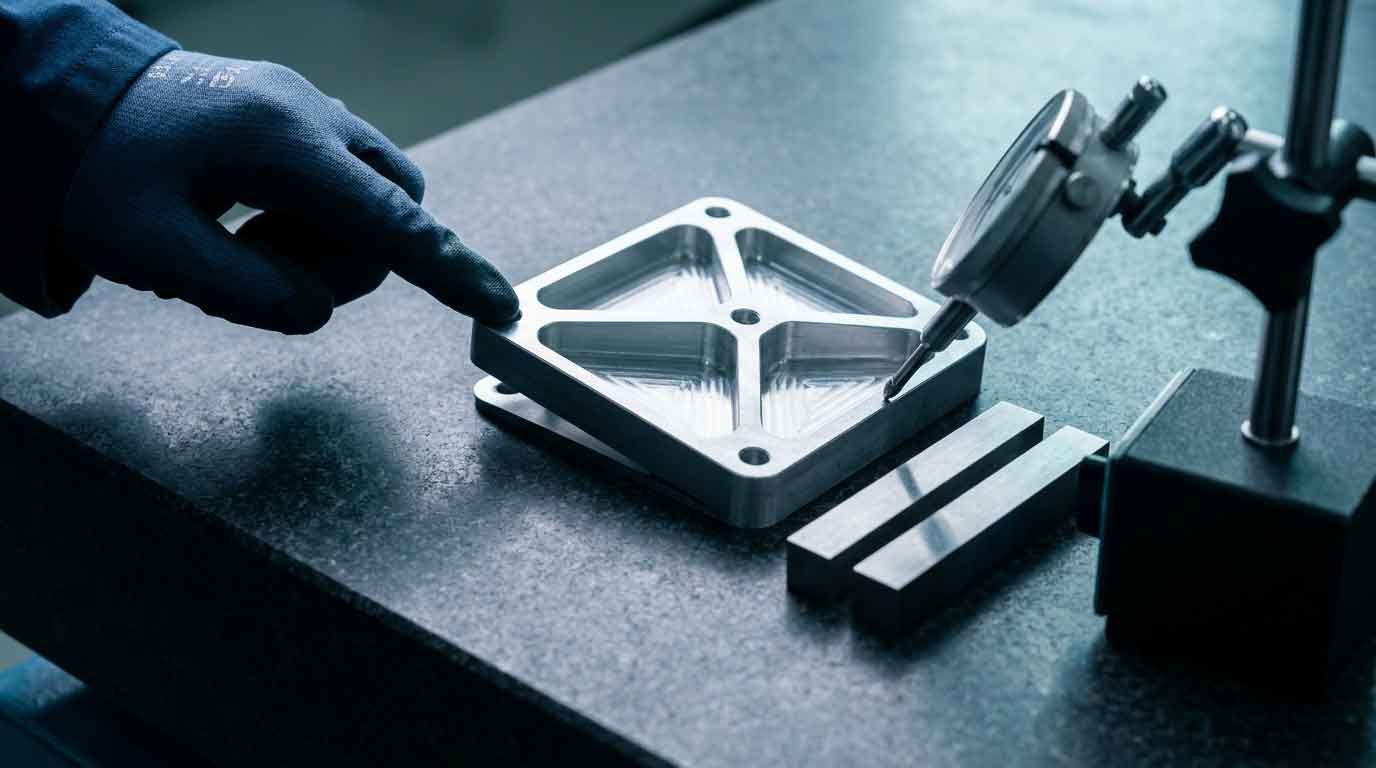
inspection records you can file against the job, so the PO and the paperwork line up.
Getting the First Immersion Right
Fixing a bad run costs metal. Every strip and re-anodize removes base metal, so threads that passed after the first coat can fail after the second. Re-anodizing a reworked bore also leaves a new contact mark, sometimes in the bore itself. And touch-up is allowed only for small accidental damage, not as a repair for a run that went wrong.
Which means the first immersion is the one that counts.
A machinist sees most of the problems before the part goes in the tank. A blind pocket that faces up can trap a gas bubble, and the coating won't form where the bubble sits; one shop on a machinist forum lost most of a batch that way. A part that shifts on the rack burns and comes out uneven in thickness and color. At BluArc, pockets that can trap gas are spotted when the job is quoted and racked, not after, and parts are racked tight so they cannot move.
Mixed Alloys Come Back Different
Anodized color depends on the alloy, the temper and even the mill lot. Two parts of the same design, one cut from 6061 and one from 7075, will not come out of the same tank looking the same. That holds for clear coatings as much as dyed ones.
So we do not run different alloys in the same load. When a dyed color is called out, it gets checked at lot acceptance, which the current revision of the specification requires. If a job arrives with mixed alloys, we say so before it is racked rather than after it comes back two colors.
Masking and Marking in the Same Visit
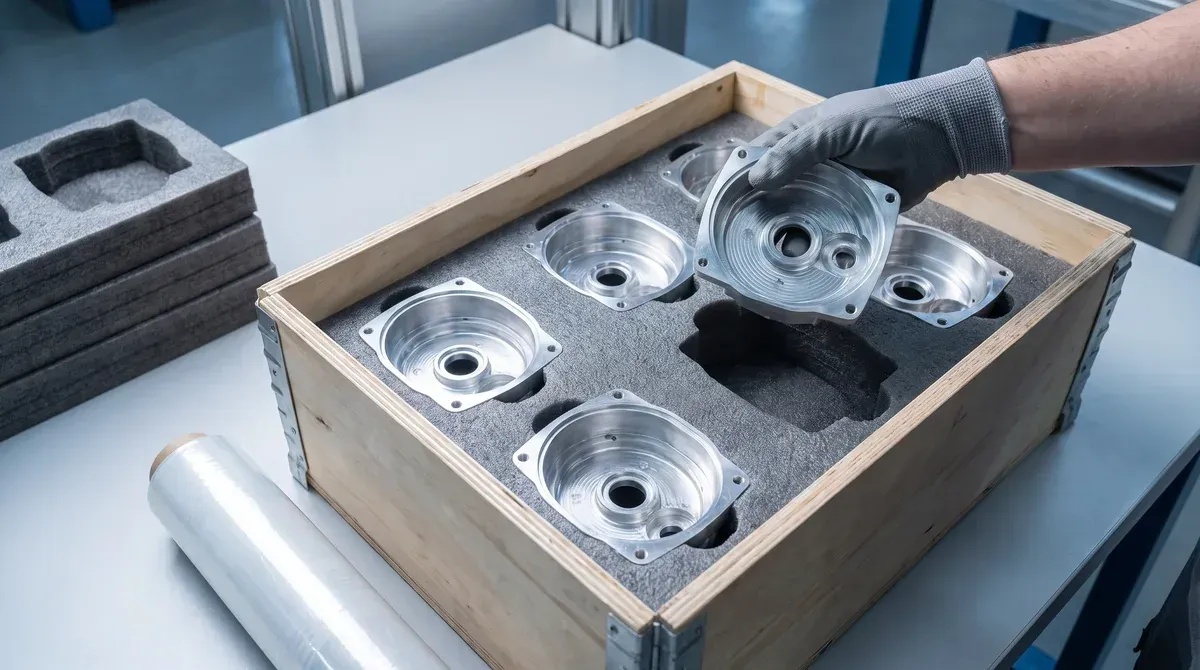
A part that needs a masked bore and a laser-marked part number shouldn't need two vendors after the tank. BluArc masks and laser marks in the same trip, and the parts go back packed so they do not touch each other. A finished part that rattles against its neighbor in a box is a part that can come back scratched through the coating.
The Straight Answer
Can a good anodizer make rack marks disappear?
No. Every anodized part touches the rack somewhere, and that spot stays bare. What a good anodizer can do is put the mark where it does no harm, on a surface the drawing does not care about. That only happens when the location is agreed before the run, on the print or the PO.
Questions Machine Shops Ask About Outside Anodizing
Can a Bad Anodize Run Be Touched Up?
Only for small accidental damage. Touch-up is meant for a nick or a scratch, not for a run with burned or uneven coating. A bad run gets stripped and re-anodized, and every strip removes base metal, so tight threads and bores can fail the second time.
Why Did Two Batches of the Same Part Come Back Different Colors?
Usually the metal changed. Color varies with alloy, temper and mill lot, so parts cut from different material can come out different even in the same tank. Keeping one alloy and temper per lot, and agreeing on an acceptable range before the run, keeps batches closer together.
Sending the Parts Out So They Come Back Right
The fix for most outside-anodizing problems is a better hand-off, not a better tank. Put the specification, the contact points and the bare features on the print. Keep alloys apart. Pick a finisher that will read the print before it racks the parts, and that will tell you about a problem before the parts ship.
How Standard Machine and Manufacturing Can Help
Standard Machine and Manufacturing anodizes aluminum parts for other machine shops through BluArc, in the same Greenville, Kentucky facility where we machine our own, with masking and laser marking in the same visit. Start a project with us by
starting your RFQ or
reaching out directly. Call us at 270.377.7172.